
Choosing your medical career
Theatre, records or community health — what each job looks like day to day.
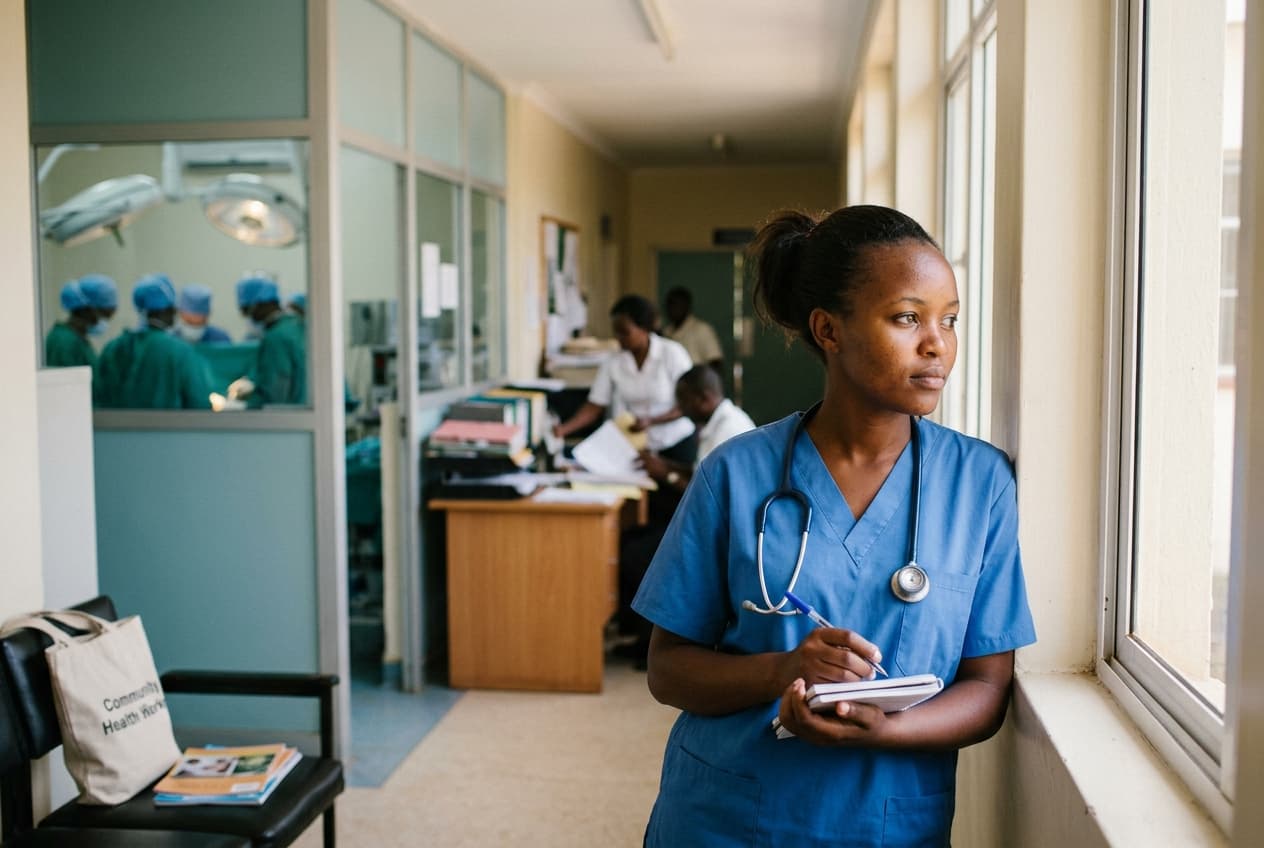
"Health career" covers a wider range of jobs than most school leavers realise. If your interest is medicine but you're not sure which corner of it suits you, three of our most popular diploma routes are a useful place to start — because they lead to genuinely different working days.
A perioperative theatre technologist works inside the operating theatre itself: preparing instrument trays, maintaining a sterile field, and supporting the surgical team through a procedure. It suits people who are calm under pressure and comfortable with precise, repeatable routines. Our Diploma in Perioperative Theatre Technology runs six terms, requires a KCSE mean grade of C- and above, and includes clinical attachment at Nairobi hospitals as standard.
A health records officer works with data rather than patients directly — coding diagnoses, maintaining patient files, and increasingly, keeping hospital information systems running accurately. It suits people who are methodical and comfortable with computers. Our Diploma in Health Records & IT covers medical terminology, health information systems, coding and classification, and data protection, alongside the same clinical attachment route.
A community health worker sits closer to the public: home visits, health education, and frontline HIV and maternal-health services, usually through a government or NGO programme rather than a hospital ward. It suits people who want their work to reach whole neighbourhoods rather than one patient at a time. Our Diploma in Community Health & HIV Management and our Diploma in Community Development & Public Health both lead here.
None of these is a "lesser" option than the others — they're just different jobs wearing the same broad label. The honest way to choose is to think about whether you'd rather be in a theatre, at a desk, or in the community, and then look at the specific diploma that leads there. If you're still unsure, the admissions desk can talk you through what a typical week looks like in each field before you apply.